What Hostinger Premium WordPress Hosting Includes in 2026
Hostinger Premium WordPress Hosting Review 2026 comes down to one buying question: does Premium give a normal WordPress site enough room to grow, or is it just a mid tier plan padded with marketing language.
Premium sits between Single and Business in Hostinger's WordPress lineup, and it is the tier Hostinger promotes hardest on its pricing pages, so it deserves an honest look before you pay for it.
The core package includes managed WordPress tools, a dedicated WordPress dashboard inside hPanel, free SSL, a staging environment, and enough resources to run a handful of active sites without jumping straight to Business.
For a wider breakdown of every tier Hostinger sells, the full Hostinger WordPress hosting review compares Single, Premium, and Business side by side in one place.
Premium buyers typically want more than a single hobby site, but do not yet need store level resources or daily backups. That gap is exactly where Premium is built to sit.
In practice, moving a small brochure site from Single to Premium takes under an hour, including reconnecting the domain and reissuing SSL. That kind of quick turnover is common feedback from small business owners upgrading mid year.

Premium sits between Single and Business, built for sites that have outgrown one website but do not need store level resources yet.
Before comparing specs line by line, it helps to see current plan pricing next to Premium's actual limits on the same page. You can view Hostinger Premium plan pricing and specs together on the live order page.
Hostinger Premium Features That Matter for a WordPress Site
Hostinger Premium features that matter for a WordPress site go beyond the marketing checklist most comparison pages repeat without much context.
Free SSL, a one click WordPress installer, and a staging tool for testing changes before they go live are all included, which covers most of what a small site needs on day one.
LiteSpeed cache comes built in and handles a large share of everyday speed work automatically, without needing a separate caching plugin for most simple WordPress sites.
Weekly automatic backups are part of Premium too, which is a step up from Single and gives a reasonable safety net for a blog or small business site that updates content regularly.
The Hostinger Premium plan page lists these features together with the current storage and monthly visit allowance for your region, which is worth checking before you assume anything from an older screenshot.
Inside hPanel, the WordPress specific view groups install, staging, cache, and backup controls on one screen, which is genuinely easier to navigate than digging through a generic hosting control panel.
Premium also includes a set number of business email accounts tied to your domain, which matters for a small business site that wants a professional inbox without paying separately for email hosting.
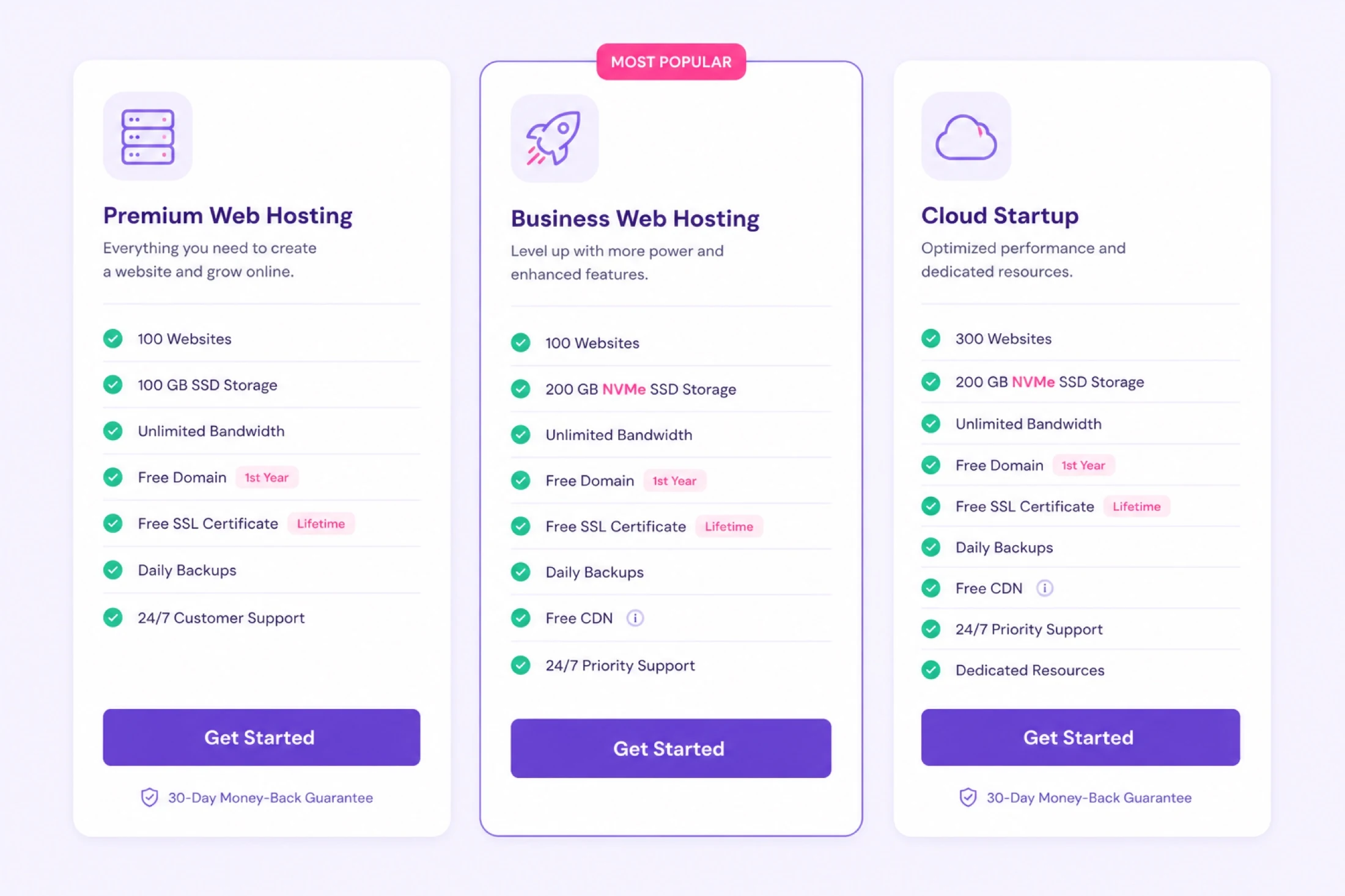
Cache, staging, and weekly backups are grouped together in hPanel, which keeps daily WordPress maintenance simple.
Hostinger Premium Website and Resource Limits Explained
Hostinger Premium website and resource limits explained matters more than the feature list, since limits are what actually decide if Premium fits your site long term.
Premium supports multiple websites on one account, which is the main practical difference from Single. Storage, bandwidth, and monthly visit allowances also step up, though exact numbers can shift by region and promo window.
Email accounts included with Premium are usually enough for a small team or a solo site owner running a handful of addresses for a business inbox.
Hostinger does not publish a hard visitor cap on Premium, but very heavy traffic spikes still hit shared resource ceilings sooner than they would on Business.
If you are still unsure which tier's limits actually match your project, choose Hostinger plan and term on the live page so the current allowance shows next to the price you would pay.
A simple test helps here. Count how many separate WordPress sites you expect to manage in the next twelve months, then match that number against Premium's multi site allowance before assuming Business is required.
A seasonal spike, like a holiday sale mentioned on a small shop's blog, is the kind of traffic pattern that tests Premium's shared resource pool the hardest. If that spike repeats every year, Business absorbs it more comfortably.
Free Domain and SSL on Hostinger Premium Explained
Free domain and SSL on Hostinger Premium explained is one of the most searched questions about this plan, and the honest answer has two different parts.
Free SSL is included on Premium no matter which term length you pick, and it renews automatically in the background once your site is connected.
A free domain is narrower. It typically applies only on qualifying annual or longer Premium terms, not on short term orders, so it needs its own check before you count it as savings.
If a free domain year matters for your launch budget, get WordPress hosting on a qualifying annual term and confirm the domain eligibility row before you finish payment.
Domain renewal after that first free year is a separate line item. Add it to the same year two budget you already build for hosting renewal itself, so nothing feels like a surprise invoice later.
Because SSL renews automatically behind the scenes, most site owners never touch that setting again after the first connection. The domain renewal date is the one that actually needs a yearly check on your calendar.
Hostinger Premium Speed and Performance Basics
Hostinger Premium speed and performance basics start with NVMe storage, which is faster than older spinning disk setups and noticeably shortens page load on most small WordPress sites.
Built in LiteSpeed cache handles page caching automatically once activated, and it usually covers everyday speed needs without adding a third party caching plugin on top.
A content delivery network is available as an add on rather than bundled by default on every term, so confirm whether it is included before assuming your checkout price already covers it.
Buyers chasing genuinely fast WordPress hosting should still test image sizes and plugin count, since a heavy theme can slow down even a well cached Premium site.
In practice, a lean WordPress install on Premium loads quickly for a blog or small business site. A large catalog with hundreds of product images is where Premium starts to feel the ceiling.
Running a free speed test right after launch gives a baseline worth saving. Check that number again after installing your first few plugins, since plugin count affects load time more than the hosting plan itself in many cases.
Hostinger Premium Pricing and Renewal Price Honesty
Hostinger Premium pricing and renewal price honesty is the section most coupon pages skip, and it is exactly where buyers get surprised a year later.
The promotional price shown on most offer links covers the first billing term only. It is not a permanent rate, no matter how the banner above it is worded.
The renewal price sits higher and appears on the same order summary page, right below or beside the promo total, before you ever enter payment details.
Checking WordPress hosting pricing live, rather than trusting an old screenshot from a review site, is the only way to know your actual first year and renewal numbers.
That single habit prevents most of the price confusion buyers run into after their first renewal notice arrives, since the order summary rarely matches whatever number a random comparison post quoted months earlier.
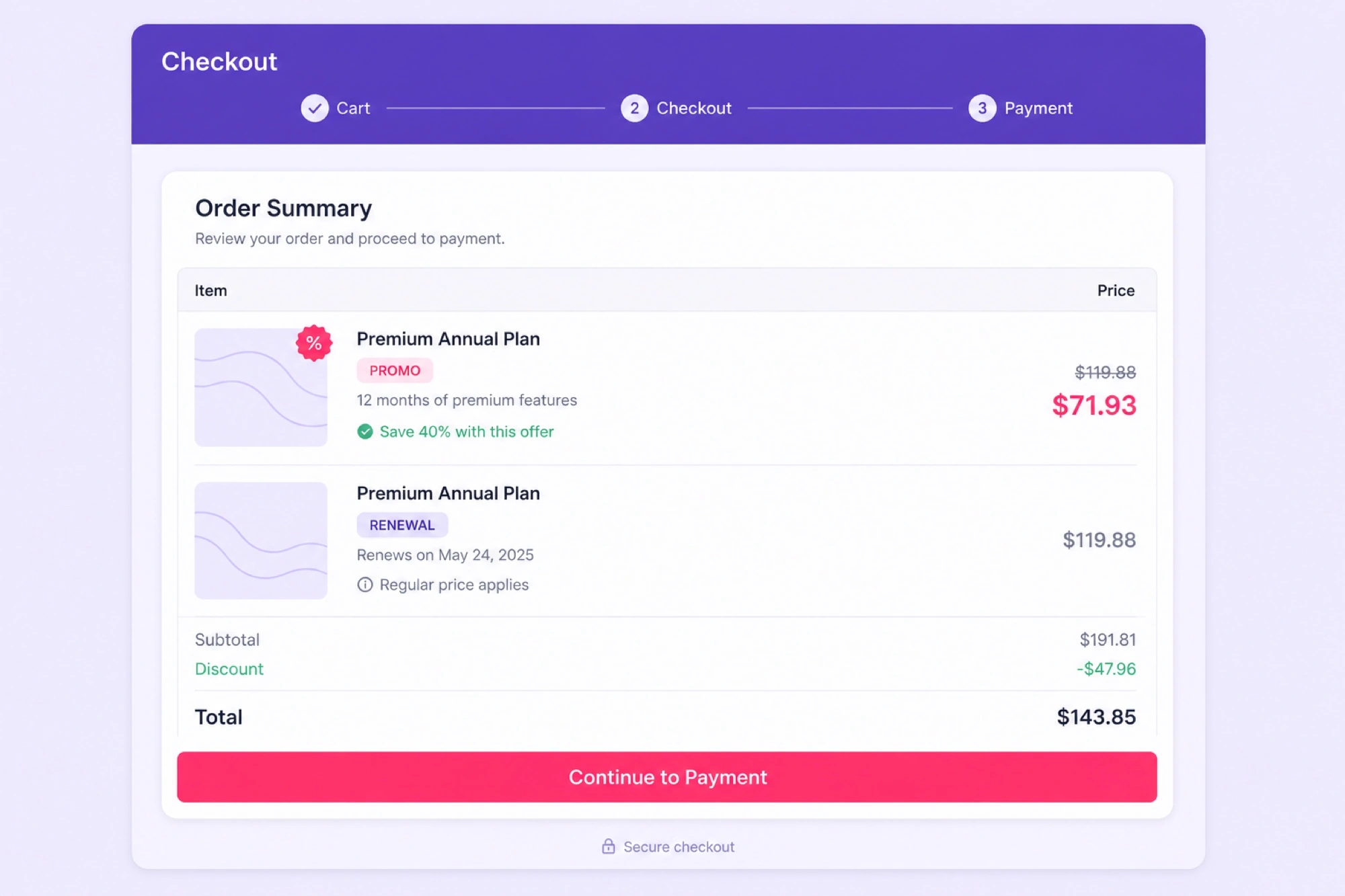
Read the promo total and the renewal price together on the same order summary before you pay.
For the full math across every tier, including what Premium costs after year one, how much does WordPress hosting cost on Hostinger lays out monthly and renewal figures side by side.
A simple habit fixes most of the surprise later. Screenshot the order summary the day you buy, then set a calendar reminder near the renewal date so the next charge never feels unexpected.
Pricing also varies by currency and region, so a number quoted in one country's review will not always match what your own checkout shows. Treat every published price, including the ones in this review, as a starting point to confirm live.
Hostinger Premium vs Business: Which Plan Fits Your Site
Hostinger Premium vs Business: which plan fits your site is the fork most buyers reach once they have already ruled out Single.
Business steps up backup frequency to daily, adds more resources for traffic spikes, and generally suits stores or content sites publishing at a faster pace than a typical small blog.
Premium's weekly backup schedule and shared resource pool are enough for most portfolios, local business sites, and blogs that are not running a checkout page with real daily orders.
The Hostinger Business plan earns its higher renewal specifically when backup frequency or resource headroom already matter today, not as a hypothetical for later.
When backups or traffic already tip the decision either way, the full Hostinger Premium vs Business comparison walks through every resource difference against the renewal line in more depth.
Staging works the same way on both tiers, letting you test a theme or plugin update on a copy of your site before pushing it live. The real difference shows up only when something breaks and you need yesterday's backup instead of last week's.
| What matters | Single | This review's focus Premium | Business |
|---|---|---|---|
| Websites | 1 website | Multiple websites | Multiple websites |
| Backups | Weekly | Weekly | Daily |
| Free SSL | Included | Included | Included |
| Free domain eligible | Often limited | Common on qualifying annual terms | Common on qualifying annual terms |
| Best fit | One practice or hobby site | Small business, blog, portfolio | Store or heavier traffic site |
Exact resource and renewal figures change by region and term. Confirm live Hostinger checkout for your plan.
Hostinger Premium vs Single: Is the Upgrade Worth It
Hostinger Premium vs Single: is the upgrade worth it comes down to how many WordPress sites you actually plan to run this year.
Single covers exactly one website with fewer resources and no staging environment, which fits a first practice site or a single niche blog with modest traffic.
The moment a second website enters the picture, whether it is a client project or a second niche idea, Premium's multi site allowance usually pays for the price difference on its own.
Buyers ready to buy Hostinger WordPress hosting for more than a single site should compare Premium's renewal against running two separate Single accounts before deciding.
Running two Single plans instead of one Premium plan rarely saves money once both renewal lines are added together, and it also means managing two separate hPanel accounts.
A freelance designer running one portfolio and one client demo site is a common example of someone who outgrows Single within the first few months, not years, once real client work starts landing.
Setting Up a WordPress Site on Hostinger Premium
Setting up a WordPress site on Hostinger Premium is a short process once checkout is done, and it follows the same basic steps every time.
- Open a current Hostinger Premium WordPress hosting offer link.
- Pick a billing term that fits your budget and renewal comfort.
- Complete checkout and confirm the order summary details.
- Use the one click WordPress installer from hPanel.
- Connect your domain and verify the free SSL is active.
- Turn on the staging tool before making major theme changes.
- Publish a first page the same day to test speed and cache.
The install step itself usually finishes in a few minutes, and the WordPress dashboard becomes available almost immediately after hPanel confirms the setup is complete.
When you are ready to test this against a live cart, start WordPress hosting checkout and walk through each step above before adding real content.
If you are moving a domain from another registrar, DNS changes can take a few hours to fully propagate. Plan the switch during a low traffic window so visitors do not see a mismatched site mid transition.
Common Mistakes When Buying Hostinger Premium Hosting
Common mistakes when buying Hostinger Premium hosting usually happen before checkout, not after the site is already live.
Skipping the renewal line is the biggest one. Buyers focus on the promo total and forget to read what the same plan costs starting year two.
Assuming a free domain applies to every term is another common mistake. That eligibility is usually tied to annual or longer Premium terms specifically.
Comparing unequal terms, like a 24 month Premium quote against a 12 month Single quote, also leads buyers to the wrong conclusion about which plan actually saves more.
More plan mistakes and side by side breakdowns sit inside the WordPress hosting blog if you want to sanity check another tier before paying for Premium.
Delaying the WordPress install after checkout wastes momentum too. Buyers who compare affordable WordPress hosting and then sit on an unused account for weeks lose the easiest window to test speed and cache settings.
Ignoring email account limits when a growing team needs more inboxes than the plan includes is another overlooked mistake. Check that allowance early instead of discovering it during a hiring push.
Who Should Buy Hostinger Premium WordPress Hosting
Who should buy Hostinger Premium WordPress hosting includes anyone running more than one small site without needing store level backup frequency.
Freelancers managing a portfolio plus a personal blog, local businesses with a marketing site and a booking page, and creators running two content projects are typical fits.
Small agencies handling two or three light client sites also benefit, since Premium's multi site allowance often covers the whole workload without paying for Business headroom nobody is using yet.
If that describes your project, buy WordPress hosting on a term that matches your budget and note the renewal date the same day you check out.
That single date matters more than any promo banner still showing on the page a year from now, since it decides what your card actually gets charged without a coupon attached to soften it.
More plan comparisons and current listings live on the wordpress hosting homepage if you want a wider shortlist before settling on Premium specifically.
A content creator publishing two or three times a week on a niche blog, alongside a small portfolio site for freelance work, is exactly the kind of workload Premium was built to carry comfortably.
Who Should Skip Hostinger Premium in 2026
Who should skip Hostinger Premium in 2026 starts with anyone who only needs a single test site and no plan to expand it soon.
Single is the cheaper, simpler fit for a first practice blog, a resume site, or a one off landing page that will not grow into a second website this year.
On the other end, a store expecting real checkout traffic, or a site that already needs daily backups, outgrows Premium before the first renewal even arrives.
For that heavier workload, it is worth reading how Business handles the same job before you assume Premium will stretch far enough on its own.
Buyers deciding between paths can compare Hostinger WordPress hosting plans directly on the live pricing page before locking in either tier.
Anyone already deep into a heavy WooCommerce catalog should also skip Premium, since checkout speed and order volume both lean toward Business resources sooner than a simple content site would.
Hostinger Premium WordPress Hosting Review FAQ
These are the questions buyers ask most often before deciding on Hostinger Premium for a WordPress site in 2026.
Each answer below matches the checkout and plan details covered earlier, written short enough to scan right before you buy.
Is Hostinger Premium worth buying for WordPress in 2026?
Premium is worth buying when a site has already outgrown Single and needs more than one website, but does not yet need Business level backups or resources. For that middle stage, Premium is usually the better priced fit.
What does Hostinger Premium include for WordPress hosting?
Premium includes managed WordPress tools, free SSL, a staging environment, LiteSpeed cache, weekly backups, and support for multiple websites on one account, along with the standard hPanel dashboard.
Does Hostinger Premium come with a free domain and SSL?
Free SSL is included on Premium regardless of term length. A free domain is typically only included on qualifying annual or longer Premium terms, so confirm that line on the order summary before you pay.
How many websites can I host on Hostinger Premium?
Premium supports multiple websites on one account, unlike Single which allows only one. The exact website and resource allowance can shift by region, so check the live plan page for your current allowance.
Is Hostinger Premium fast enough for a growing WordPress site?
Premium runs on NVMe storage with built in LiteSpeed caching, which covers most everyday WordPress speed needs. Sites with heavy traffic spikes or large stores usually feel the ceiling first and benefit more from Business.
What is the Hostinger Premium renewal price after the first term?
The promotional price on Premium applies to the first term only. The renewal rate is higher and appears on the same checkout order summary, so confirm it there instead of relying on the promo banner alone.
Should I buy Hostinger Premium or Business for WordPress?
Buy Premium for normal blogs, portfolios, and small business sites with everyday traffic. Buy Hostinger WordPress hosting on Business when the site already needs daily backups, more resources, or is preparing for a store with heavier checkout traffic.
Is Hostinger Premium a good upgrade from Single?
Yes, if you plan to run more than one website or already feel Single's single site limit. Premium adds multi site support and more resources for a moderate price step above Single.
Final Verdict: Is Hostinger Premium Worth Buying in 2026?
Premium earns its price the moment a site needs more than one website, a staging tool, and weekly backups, without yet needing the heavier resource pool Business is built for.
It stops making sense the day daily backups, larger storage, or store level checkout traffic show up on your roadmap. At that point Business is the honest buy, not a stretched version of Premium.
The renewal price is the number that decides whether this plan feels fair a year from now, so read it on the order summary before the promo banner shapes your decision.
For most small business sites, blogs, and light multi site portfolios, Premium hits the middle ground between price and resources without forcing an upgrade nobody needs yet.
None of this replaces checking the live plan page yourself, since Hostinger updates pricing, resource allowances, and promo windows throughout the year rather than keeping one fixed rate forever.
Open a current offer, compare the promo and renewal numbers side by side, then claim Hostinger offer pricing once every line on the order summary makes sense for your project.